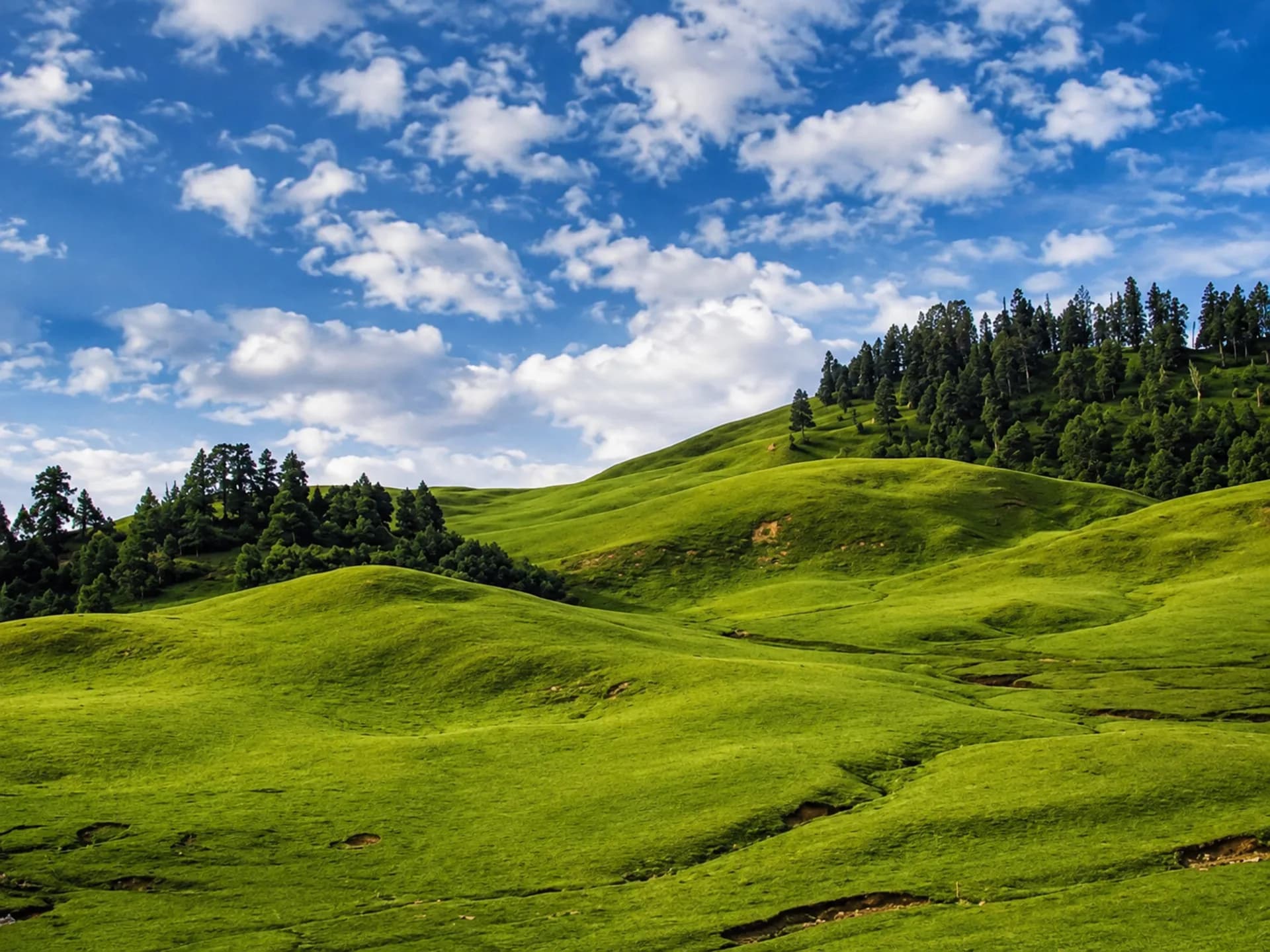
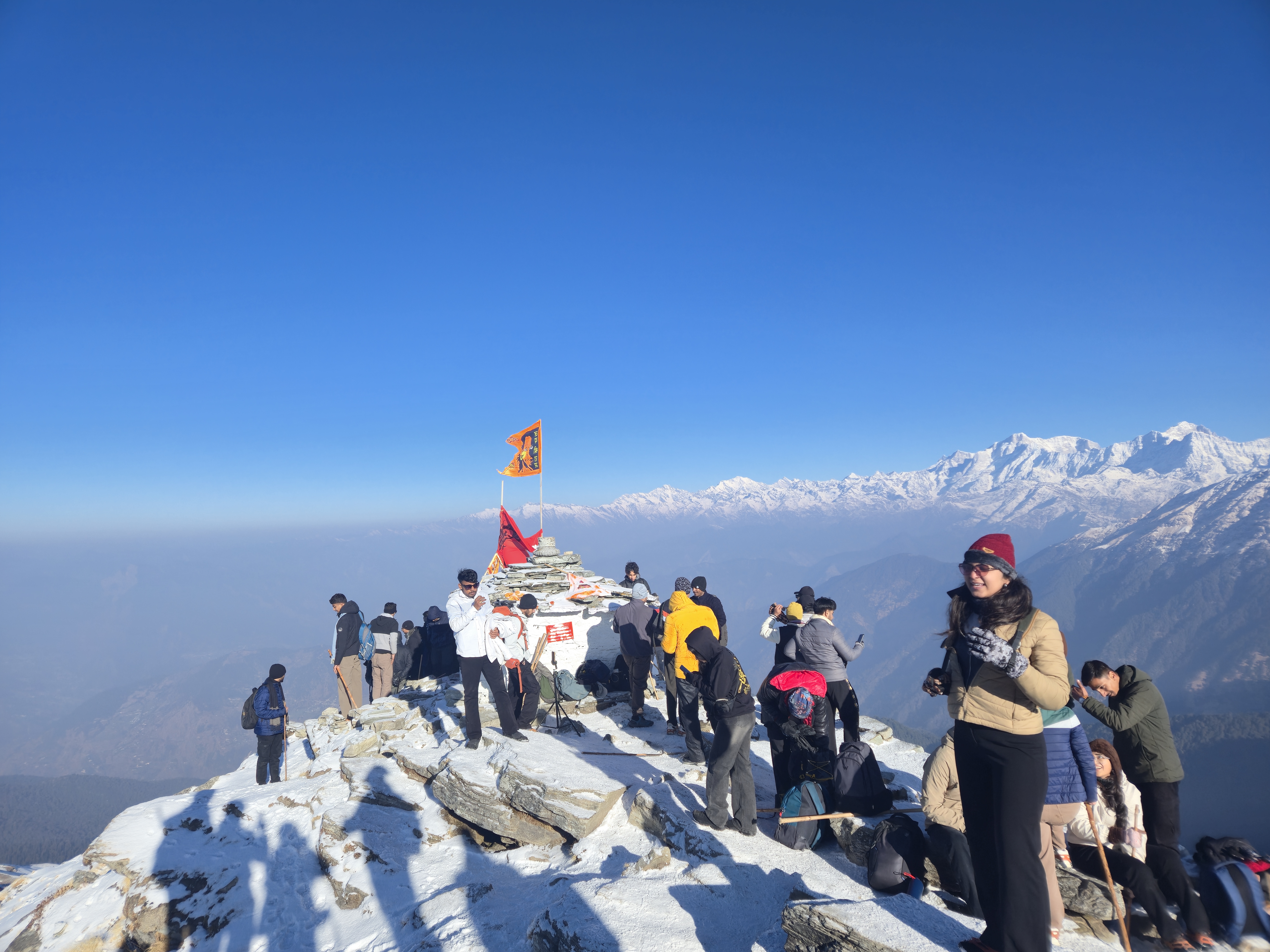
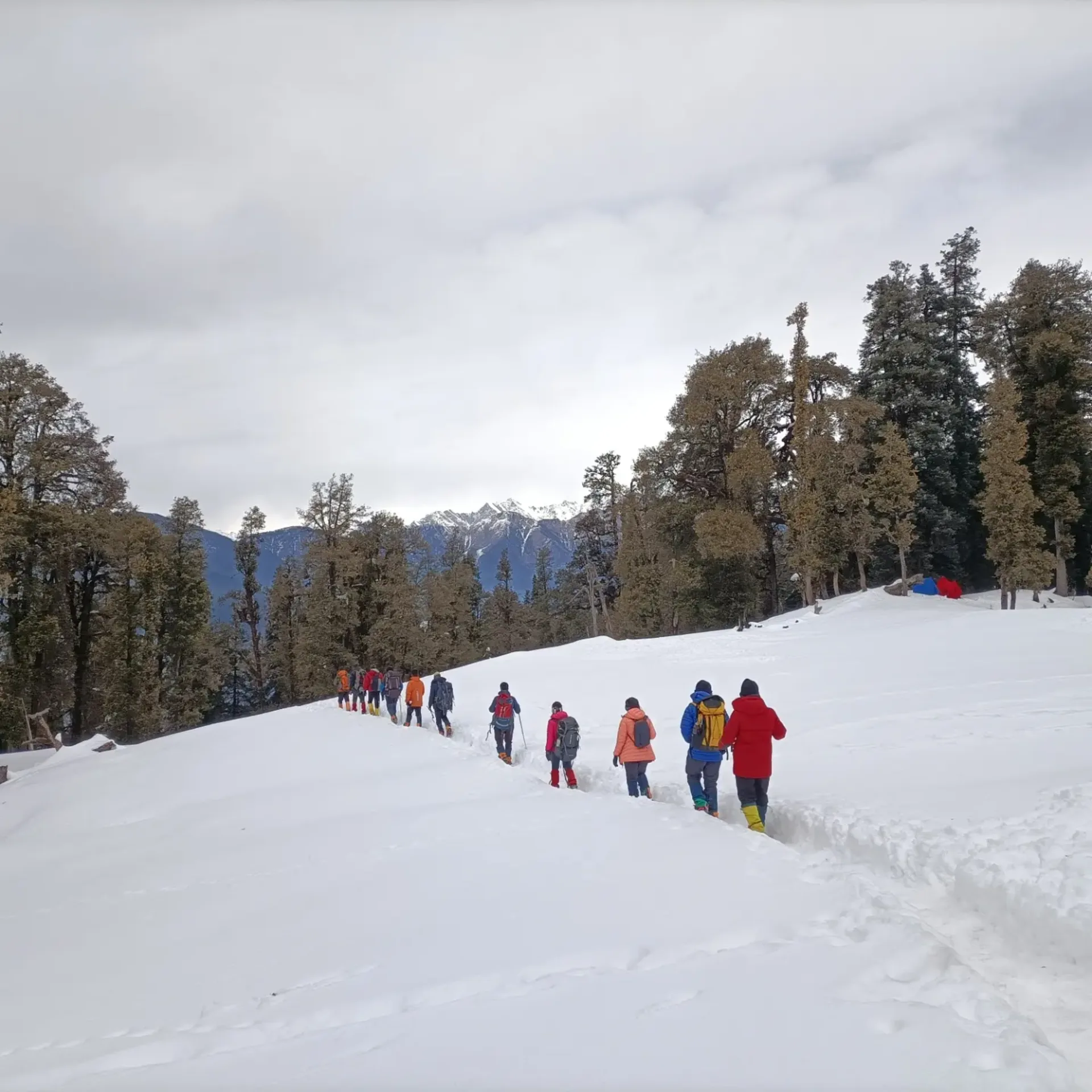
The Kuari Pass Trek, also known as the Lord Curzon Trail, offers one of the best Himalayan panoramas accessible to trekkers. From the 12,516 ft pass, you can see Nanda Devi, Kamet, Dronagiri, Hathi Parbat, and over 20 other peaks.
Founder-Led Adventure Series
Once a month, MonkTrekker personally leads one small-group Himalayan journey — not a standard package, but a route chosen for what it teaches, not just where it goes. Expect backpacking over marked trails, unscheduled stops in villages most itineraries skip, campfire conversations that run late, and a pace built for actually being there, not just getting through it.
September 2026
A 7-day backpacking route to Roopkund, capped at 12 trekkers so the group actually gets to know each other — and MonkTrekker. No fixed camps, no rush between checkpoints, and long enough away from signal that you'll notice it.
Coming Soon
Dates open for applications roughly 4–6 weeks before departure — follow along or check back here for updates.
The Lord Curzon Trail — grand Himalayan panorama from a high mountain pass
Starting from
₹8,999
About the Trek
The Kuari Pass Trek, also known as the Lord Curzon Trail, offers one of the best Himalayan panoramas accessible to trekkers. From the 12,516 ft pass, you can see Nanda Devi, Kamet, Dronagiri, Hathi Parbat, and over 20 other peaks.
Our Honest Take
We've done this trek multiple times. Here's what we actually think.
Trekkers who've done a beginner Himalayan trek before and want a longer, higher route without moving into technical mountaineering
October–November if long-range mountain visibility matters most to you; March–May if you'd rather have forest and meadow color over maximum clarity
This is your first trek ever, or you're looking for a short trail with a quick payoff — Kuari Pass asks for several consecutive days of sustained walking
March to June and September to November are the more reliable windows; winter changes the trek significantly and should be planned around actual conditions, not assumed snow
Why This Trek
Gallery
The Route
Base town on the Rishikesh–Badrinath road; overnight stop before and after the trek.
First campsite, reached from Pipalkoti; forest and lower mountain terrain.
Higher camp shadowed by Mt Dronagiri; last stop before the pass.
High point of the trek; panoramic views toward Nanda Devi and the Garhwal peaks.
Descent point before the road journey back to Pipalkoti.
Day by Day
6 days · All meals and accommodation included · Select a batch to view exact dates
The road journey out of Rishikesh runs deep into Chamoli district, gaining altitude gradually as the plains give way to mountain valleys. Pipalkoti is your base for the night and your return point after the trek.
It's a long day in the vehicle — carry snacks and water for the drive, and expect the last stretch into Pipalkoti to run into evening.
The day starts with a short drive from Pipalkoti to the roadhead at Tugasi. From Tugasi, the real trekking begins as you ascend on foot through lower, greener mountain country toward the first campsite at Gulling.
The transition from the drive to the trek happens today — make sure your daypack is ready before leaving Pipalkoti.
The trek continues through forests of oak and rhododendron, opening gradually into meadow as you climb toward Khulara. The campsite sits in view of Mt Dronagiri and is your last stop before the pass.
Take this day at a controlled pace — tomorrow is the longest and highest day of the trek.
The summit day. From Khulara, the climb to Kuari Pass opens into the trek's widest views — on a clear day, Nanda Devi and the surrounding Garhwal peaks dominate the horizon. After taking in the views at the pass, you retrace your steps and descend back to Khulara for the night.
Start early and dress for the coldest, windiest point of the trek — the pass is fully exposed with nothing to break the wind.
The trekking ends here. From Khulara, the trail descends back to the roadhead at Tugasi, where a vehicle takes you back to Pipalkoti for a proper bed and hot meal after camping.
Keep cash on hand for Pipalkoti — it's your last stop with reliable shops before the return drive.
The return drive to Rishikesh, retracing the road down out of Chamoli district. The trek officially ends on arrival in Rishikesh.
Book onward travel from Rishikesh for the evening rather than midday, in case the drive down runs long.
Pricing
Starting from
Includes all meals, accommodation, guide & permits
USD shown as approximate reference only. Payment processed in INR.
Traveling as a group? Save more — Small group: 5% off, College group: 10% off, Large corporate / college group: 15% off.
No hidden charges · Cancel up to 30 days before
Extras
Customise your trek experience.
What You Get
Preparation
What your body needs to be ready for this trek.
Daily Walking
4-8 hours on trekking days
per day
Week 1
Build consistency — 30-40 min brisk walk most days, one longer 5-6 km walk
Week 2
Add elevation — stair climbing or incline walking, plus basic leg-strength work
Week 3
Trek-specific training — 45-60 min brisk walks, one long 8-10 km walk, ideally on hilly terrain, in the shoes you'll wear on trek
Week 4
Taper — reduce volume, keep moving lightly, rest fully in the final 1-2 days before departure
Are You Ready?
5 quick questions to gauge your readiness for Kuari Pass Trek.
Note: This is a general guidance tool, not a medical assessment. Consult a doctor before trekking if you have pre-existing health conditions, heart or respiratory issues, or are pregnant.
Answer 5 questions in 60 seconds and we'll tell you exactly how prepared you are.
Climate
October and November give you the clearest long-range Himalayan views if that's your main reason for choosing this trek. March through June trades some of that clarity for greener forest and meadow color, with spring rhododendrons in the lower sections. Winter is a different trek altogether — snow can change the route's difficulty significantly, and it shouldn't be booked on the assumption of a fixed amount of snow. Whatever month you go, pack for conditions at Kuari Pass, not conditions in Pipalkoti — the two can be 20 degrees apart.
| Month | Experience | Snow | Crowds | Temp (°C) |
|---|---|---|---|---|
| January | Deep winter conditions. Daytime temperatures around 2–5°C, while nights at higher camps can fall below −8°C and occasionally much lower during severe cold spells. Snow is likely on the upper route. | High | Low | -12° – 5° |
| February | Snow-covered upper trail likely, sub-zero nights at altitude | High | Low | -12° – 6° |
| March | Winter easing into spring; cold mornings, improving days | Medium | Low | -8° – 10° |
| April | Forests coming alive; spring conditions, cold nights at higher camps | Medium | Medium | -5° – 14° |
| May | Green landscapes, clearer trail conditions | Low | High | -3° – 17° |
| June | Warmer lower sections, cool higher up; window before monsoon | Low | High | 0° – 18° |
| July | Monsoon — not a recommended trekking window | Low | Low | 5° – 18° |
| August | Monsoon — frequent rain and cloud cover | Low | Low | 5° – 17° |
| September | Post-monsoon; cooler, fresher, improving visibility | Low | Medium | 0° – 15° |
| October | Stable autumn window; crisp days, cold nights | Low | High | -4° – 13° |
| November | Colder, winter approaching; possible early snow | Medium | Medium | -8° – 10° |
| December | Winter conditions begin; very cold at altitude | High | Low | -12° – 6° |
What to Carry
0/24 items packed
On the Trail
Photos coming soon — check back before your trek.
Cancellation
Flexible cancellation options
Up to 90% refund · Batch transfer option
Questions
17 questions
The Kuari Pass trek is 6 days, 5 nights, Rishikesh to Rishikesh — Pipalkoti as the base village, with trail camps at Gulling, Khulara, and Tali.
Kuari Pass is in Chamoli district, in the Garhwal Himalaya, above Joshimath in Uttarakhand. Mountthrill's route reaches it via Pipalkoti rather than Joshimath — the trail runs Pipalkoti → Gulling → Khulara → Kuari Pass → Tali.
From Delhi, you first get to Rishikesh — by train, bus, or road, roughly 230 km / 6-7 hours. From Rishikesh, Mountthrill's itinerary takes over: a road journey via Devprayag, Rudraprayag, and Karnaprayag to Pipalkoti, where the trek begins. You don't need to arrange the mountain leg separately if you're booking the full package.
Mountthrill's standard Kuari Pass itinerary covers Kuari Pass only — it doesn't include the Pangarchulla summit extension. If you're specifically looking for the combined Kuari Pass–Pangarchulla route, get in touch with our team directly; that would be a different, more technical itinerary from what's outlined here. *[VERIFY: confirm with ops whether Mountthrill offers this as a custom/alternate itinerary before stating so on the page.]*
Yes, this is standard practice — you can leave any luggage you won't need on the trail at your Pipalkoti accommodation and collect it on your return. *[VERIFY: confirm the exact storage arrangement and whether there's a charge.]*
Mobile network becomes unreliable once you leave the base village and disappears almost entirely on the higher trail sections. Don't plan on being reachable once you're past Pipalkoti. *[VERIFY: confirm exactly where signal typically drops — not specified in the source brochure.]*
*[VERIFY: not confirmed for Pipalkoti.]* As a general rule on Himalayan treks, carry sufficient cash before you leave the last major town — don't rely on finding a working ATM at the base village.
Pipalkoti accommodation has standard attached facilities. On the trail, at Gulling, Khulara, and Tali, expect simple toilet tents rather than hotel-standard bathrooms — that's normal for camping at this altitude, not a sign of a poorly run trek.
A hotel stay in Pipalkoti on Day 1 and Day 5, and tented camping at Gulling, Khulara, and Tali on the trail nights in between. Camping is on a shared basis (twin/triple/quad depending on group size); single occupancy is subject to availability and an extra charge.
Yes. Forest and trekking permits are required for this route, and they're included in your trek fee — Mountthrill arranges these for you, so there's nothing you need to sort out separately.
Standard trekking gear — layered clothing, waterproof trekking shoes, trekking poles, a good backpack, and cold-weather accessories. Kuari Pass doesn't require technical mountaineering equipment like ropes or ice axes on the standard route; it's a demanding walk, not a climb.
We run it with a qualified trek leader, support staff, first-aid kit, and route decisions that prioritise the group's safety over sticking to the itinerary — if weather or trail conditions turn unsafe, the plan changes. That said, no Himalayan trek is entirely risk-free; altitude, weather, and terrain are real factors, and we're upfront about that rather than promising a guaranteed, risk-free summit.
Drone use in forest and high-altitude areas is generally restricted or requires prior permission under current Indian regulations, and this can vary by season and location. *[VERIFY: check current DGCA/forest department rules and Mountthrill's own drone policy before answering this on the live page — don't publish a firm yes/no without confirming.]*
Yes — offloading (porter or mule service for your backpack) is available, but it's not included by default. It needs to be booked separately, and charges apply. *[VERIFY: confirm exact offloading charges and advance-booking requirements.]*
Kuari Pass sits at 3,815 m (12,516 ft), the highest point on the trek.
There's no fixed upper age limit stated for this trek. What matters more than age itself is your current fitness, walking endurance, and how you handle sustained multi-day trekking at altitude. If you're 58 or older, we'd recommend talking to our trek advisor first so we can assess fitness on a case-by-case basis. *[VERIFY: confirm Mountthrill's actual age-limit / medical-clearance policy for this trek before publishing — not stated in the source brochure.]*
No — Kuari Pass isn't primarily run as a winter trek. It's best done March to June or September to November. Winter is possible but changes the trek significantly: snow can cover the higher sections and turn a moderate trek into a considerably harder one, so it should only be attempted with route conditions confirmed in advance, not assumed.
Stories
Be among the first to trek Kuari Pass Trek with Mountthrill and share your story with thousands of future trekkers.
Ready to Go?
Starting from ₹8,999/person
Next departure: 9 October 2026