
Best Winter Treks in India: A Trek Leader's Guide
Compare Kedarkantha, Dayara Bugyal, Brahmatal, Kuari Pass, Chopta Chandrashila, Aancha Top and Gulabi Kantha on snow, cold, difficulty and fitness. Practical guidance from our Dehradun-based trek leaders.
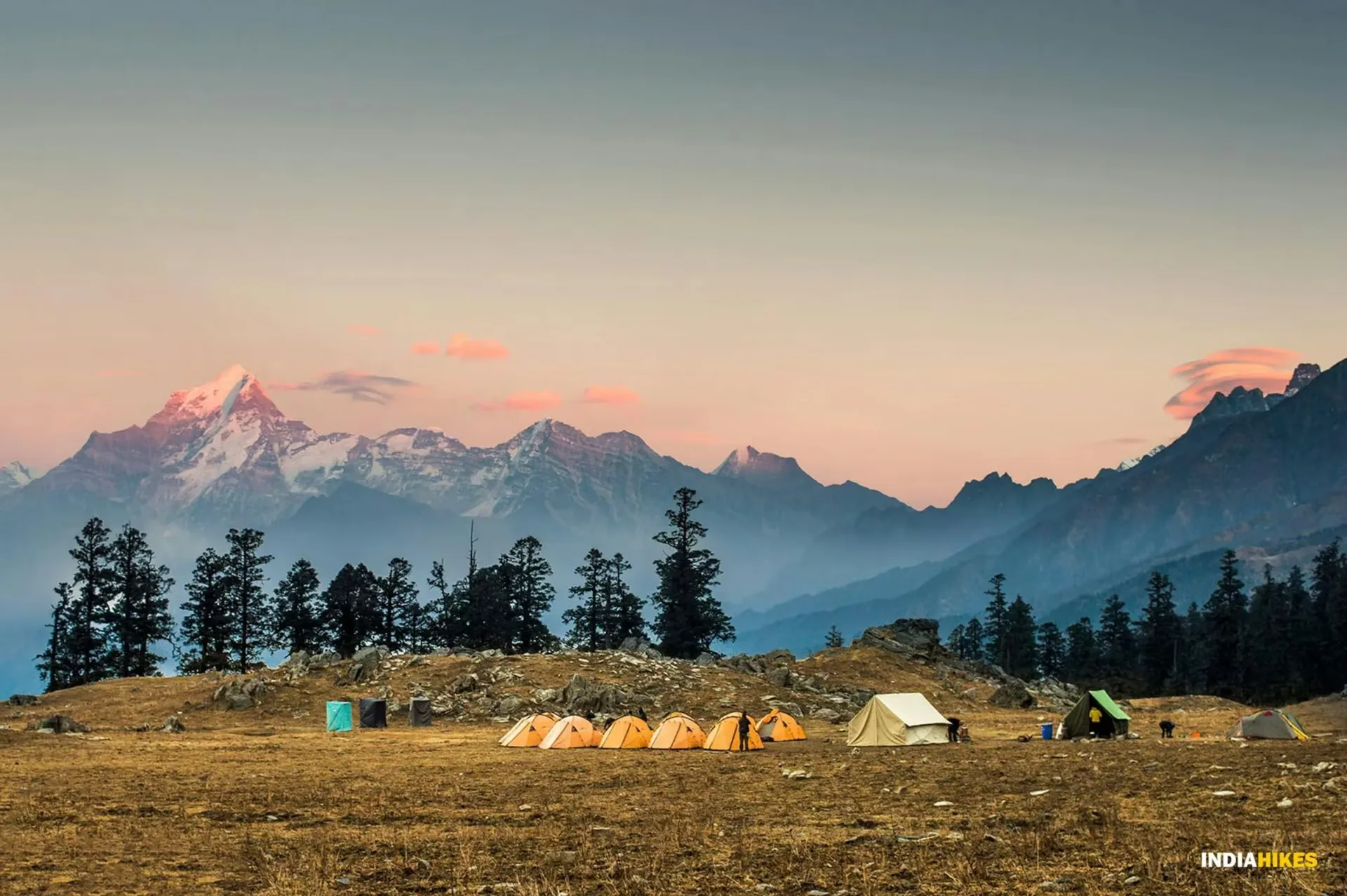
Trekkers crossing an alpine snow ridge in the Garhwal Himalayas of Uttarakhand.
The Short Answer: Which Winter Trek Should You Pick?
For a first snow trek in India, Kedarkantha is the classic choice with an achievable 12,500 ft summit sunrise. Dayara Bugyal is the gentler and quieter alternative across sweeping snow meadows. Brahmatal gives you frozen lake camps and dramatic Mt Trishul views, while Kuari Pass rewards fit trekkers with a grand Himalayan panorama including Nanda Devi. If you want a Kedarkantha-style summit with fewer people, look at Aancha Top or Gulabi Kantha.
Kedarkantha
Pine forests, frozen Juda-ka-Talab, sunrise from 12,500 ft.
Dayara Bugyal
Undulating snow slopes, peaceful meadows, fewer crowds.
Brahmatal
Lake-side snow camping, direct face of Mt Trishul (7,120 m).
Kuari Pass
The Curzon trail, ridge walking, Nanda Devi & Dronagiri.
Aancha Top
Yamunotri-region summit at 12,500 ft, with snow from December to February.
Gulabi Kantha
Snow meadows and a ridge summit above Hanuman Chatti, in the Yamuna valley.
Winter Treks in India at a Glance
All seven winter treks below are in the Garhwal Himalayas of Uttarakhand, Mountthrill's home territory. Compare them side by side:
| Trek | Base Village | Max Altitude | Grade | Duration | Best Known For |
|---|---|---|---|---|---|
| Kedarkantha TrekMost Popular | Sankri | 12,500 ft (3,810 m) | Easy–Moderate | 5D / 4N from Dehradun | First snow trek, pre-dawn summit sunrise, frozen lake camping |
| Dayara Bugyal TrekBest Meadows | Raithal | 12,300 ft (3,750 m) | Easy–Moderate | 4D / 3N from Raithal | Snow meadows, fewer crowds, gentle slopes, shorter commitment |
| Brahmatal TrekLake Camping | Lohajung | 12,250 ft (3,734 m) | Easy–Moderate | 6D from Rishikesh | Frozen-lake camps (Bekaltal & Brahmatal), close-up Mt Trishul views |
| Kuari Pass TrekMountain Views | Joshimath (Dhak) | 12,516 ft (3,815 m) | Moderate | 6D from Rishikesh | Grand Garhwal panorama, Nanda Devi & Dronagiri ridge walking |
| Chopta Chandrashila TrekWeekend Summit | Sari / Chopta | 13,123 ft (4,000 m) | Easy–Moderate | 3D from Rishikesh | Short weekend summit, Tungnath temple, Deoriyatal mirror lake |
| Aancha Top TrekQuiet Summit | Ranachatti | 12,500 ft (3,810 m) | Easy–Moderate | 5D / 4N from Dehradun | Winter summit near Yamunotri, Dinnala meadows, fewer crowds |
| Gulabi Kantha TrekTrek of the Year 2025 | Hanuman Chatti / Nishni | 12,400 ft (3,789 m) | Easy–Moderate | 5D from Dehradun | Trek of the Year 2025, snow meadows, quiet trails |
* Altitudes follow figures published by Indiahikes and Trek The Himalayas. Camps can shift by 100–200 ft with snowpack and water. The old line naming Govind National Park and Nanda Devi Biosphere is wrong for the Yamunotri-region treks.
Which Winter Trek is Best for You?
Choose based on your personal mountain preferences and physical readiness, rather than pure social media hype:
“I have never trekked in snow and want a real summit.”
Pick Kedarkantha. The trail has an easy gradient through pine forests on the first two days, comfortable campsites, and an early pre-dawn summit push to 12,500 ft with 360° views.
“I want pristine snow, but away from peak crowds.”
Pick Dayara Bugyal. With vast open alpine meadows under fresh powder, Dayara has fewer commercial camps and a gentler gradient, making it an unhurried, serene escape.
“I want to camp by frozen alpine lakes.”
Pick Brahmatal. One of the rare winter routes that takes you to two high-altitude lakes—Bekaltal and Brahmatal. The ridge gives an in-your-face perspective of Mt Trishul (7,120 m).
“I am reasonably fit and want the grandest mountain vistas.”
Pick Kuari Pass.On the historical Lord Curzon Trail, you stand face-to-face with India's second-highest peak Nanda Devi, along with Dronagiri, Kamet, and Neelkanth across crisp winter skies.
“I only have a long weekend (3-4 days).”
Pick Chopta Chandrashila. Covers the mirror lake of Deoriyatal, the ancient Tungnath Shiva temple, and a 13,123 ft summit in just 3 days from Rishikesh.
“I want a summit like Kedarkantha, but quieter.”
Pick Aancha Top. It starts at Ranachatti in the Yamunotri region and climbs through Bamsingh and Dinnala to a 12,500 ft summit. From the top you see Swargarohini, Bandarpoonch, Srikanth and Jaonli. It rates Easy–Moderate, and snow lies on the trail from December to February.
“I want a trek that is new, quiet and recognised.”
Pick Gulabi Kantha. Uttarakhand Tourism named it Trek of the Year 2025, and it is still far less crowded than Kedarkantha. The route starts near Hanuman Chatti in the Yamuna valley, passes Nishni village and Seema Thatch, and ends at a summit that looks across to Bandarpoonch and Swargarohini. Winter brings heavy snow on the meadows and ridge.
Pre-Existing Medical Conditions?
If you have asthma, hypertension, cardiac history, or joint issues, speak with our trek advisors before booking. Cold air and altitudes above 11,000 ft put extra demand on cardiopulmonary endurance.
In-Depth Guide to 7 Winter Treks
Detailed breakdowns of route profiles, terrain conditions, and mountain vistas based on Mountthrill's winter operations:
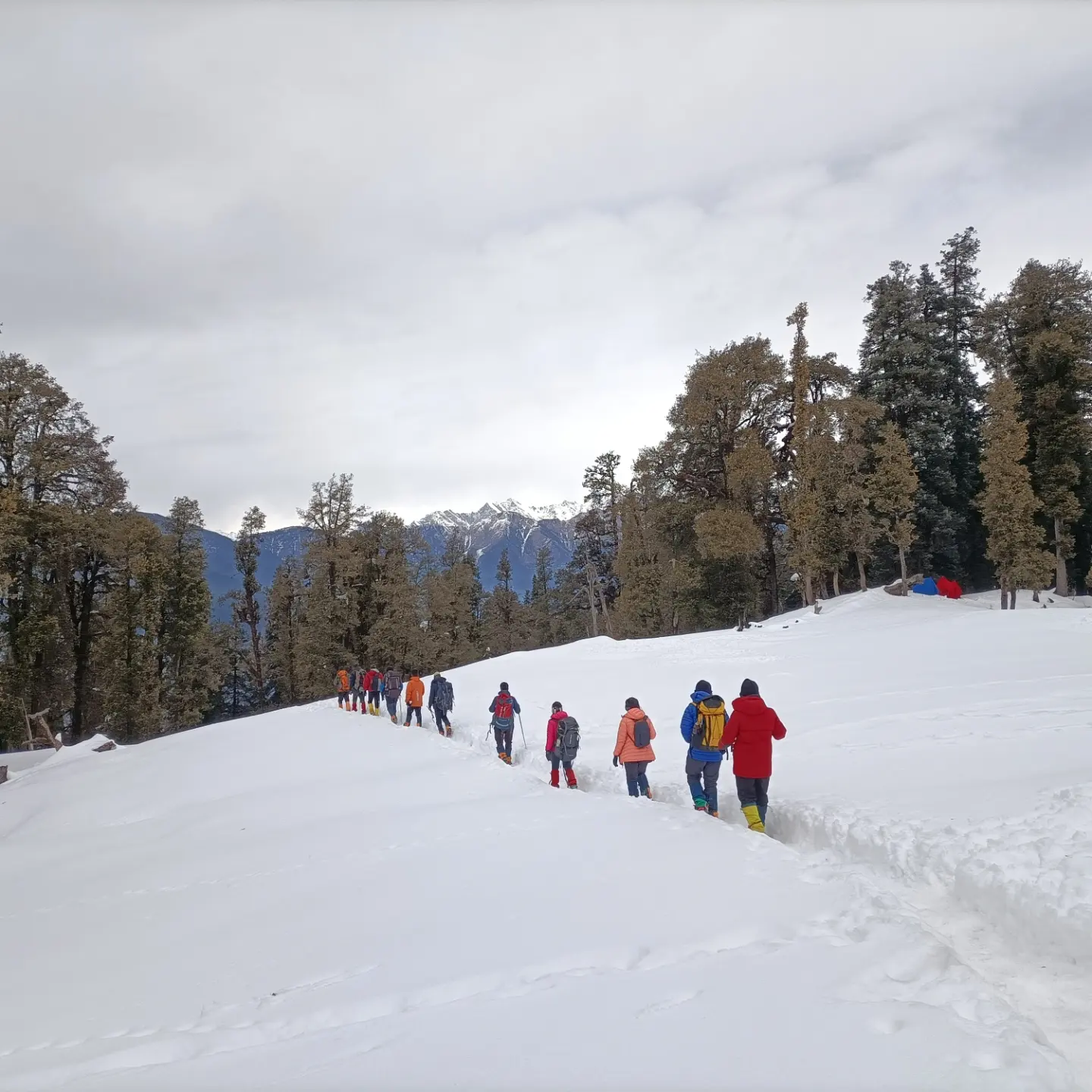
Kedarkantha Trek — The Classic First Snow Summit
Kedarkantha tops out at 12,500 ft on a distinct triangular peak. The route begins in the heritage village of Sankri, ascending through dense pine and oak forests where snow settles thick between branches. Trekkers camp near Juda-ka-Talab, a high alpine lake that freezes solid in winter, before moving to Kedarkantha Base Camp.
The summit day starts in pre-dawn darkness using headlamps and microspikes. Reaching the summit cairn as the sunrise illuminates Swargarohini, Bandarpoonch, and Black Peak is a seminal Himalayan experience.
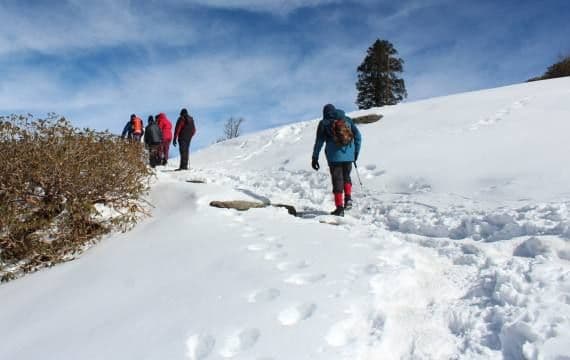
Dayara Bugyal Trek — The High Meadow in Snow
Dayara Bugyal is one of the most expansive alpine meadows in Uttarakhand. In winter, this vast grassland transforms into an immaculate white snow wonderland. Starting from the scenic village of Raithal, the trail winds gently through oak and rhododendron forests to Gui campsite before breaking out above the tree line.
Unlike Kedarkantha's steep summit push, Dayara involves gentle undulating walking across open snow fields, with towering views of Bandarpoonch (6,316 m), Kala Nag, and Srikanth peaks accompanying you throughout.
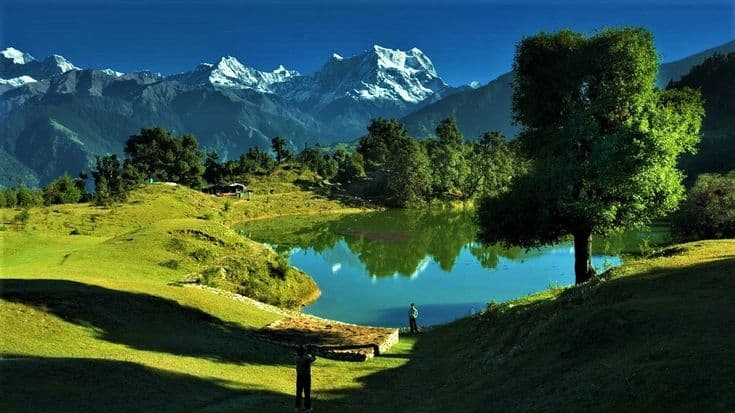
Brahmatal Trek — Lake-Side Snow Camping & Mt Trishul
Brahmatal is legendary for its dual lake features: Bekaltal, secluded deep within ancient oak and rhododendron canopies, and Brahmatal Lake, situated high above the treeline where Lord Brahma is believed to have meditated. Both lakes freeze in mid-winter.
The climb to Brahmatal Top provides a direct, uninterrupted panorama of Mt Trishul (7,120 m) and Nanda Ghunti (6,309 m) rising dramatically from the Roopkund ridge, making it a photographer's paradise.
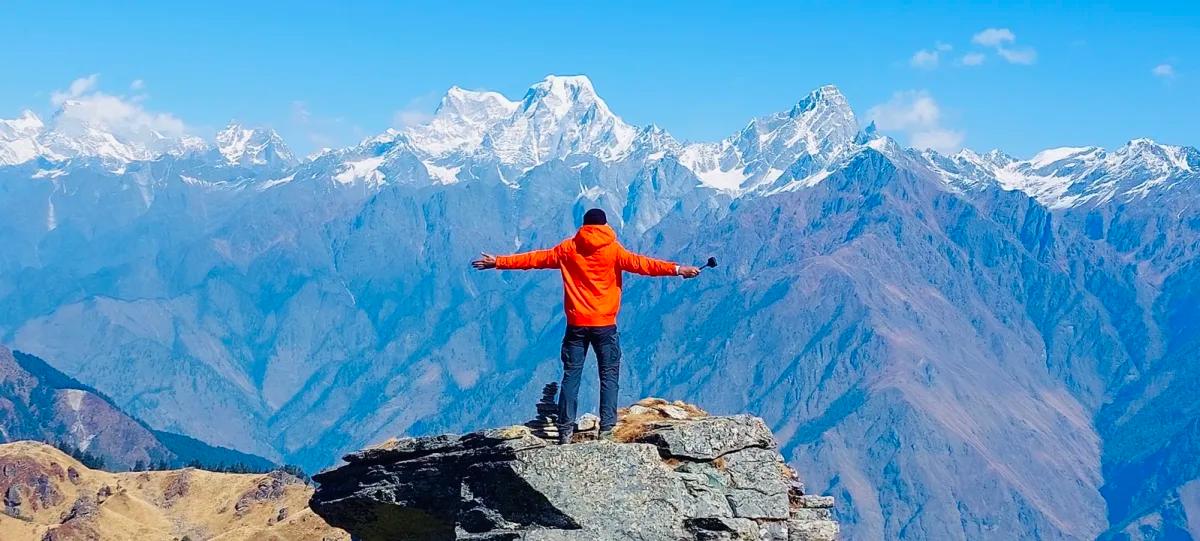
Kuari Pass Trek — The Grand Curzon Mountain Panorama
Explored in 1905 by Lord Curzon, Kuari Pass (“Curzon's Trail”) offers what veteran mountaineers regard as the most majestic mountain vista in Uttarakhand. Starting near Dhak village outside Joshimath, the trail ascends through oak forests past Gulling camp to Khullara's open snowfields.
Standing on Kuari Pass at 12,516 ft puts you face-to-face with Nanda Devi (7,816 m), India's second-highest mountain, along with Dronagiri, Kamet, Chaukhamba, Hathi-Ghodi Parvat, and Neelkanth in one continuous horizon.
Chopta Chandrashila Trek — The High Weekend Summit
Chopta Chandrashila packs the drama of a high Himalayan summit into a 3-day itinerary. Starting from Sari village to the mirror lake of Deoriyatal, the route proceeds through snow-covered rhododendron canopies to Chopta before ascending to the sacred Tungnath temple and the 13,123 ft Chandrashila summit.
The summit presents a breathtaking 360-degree panorama of Chaukhamba, Trishul, Nanda Devi, and Kedar Dome standing in striking clarity against the winter sky.
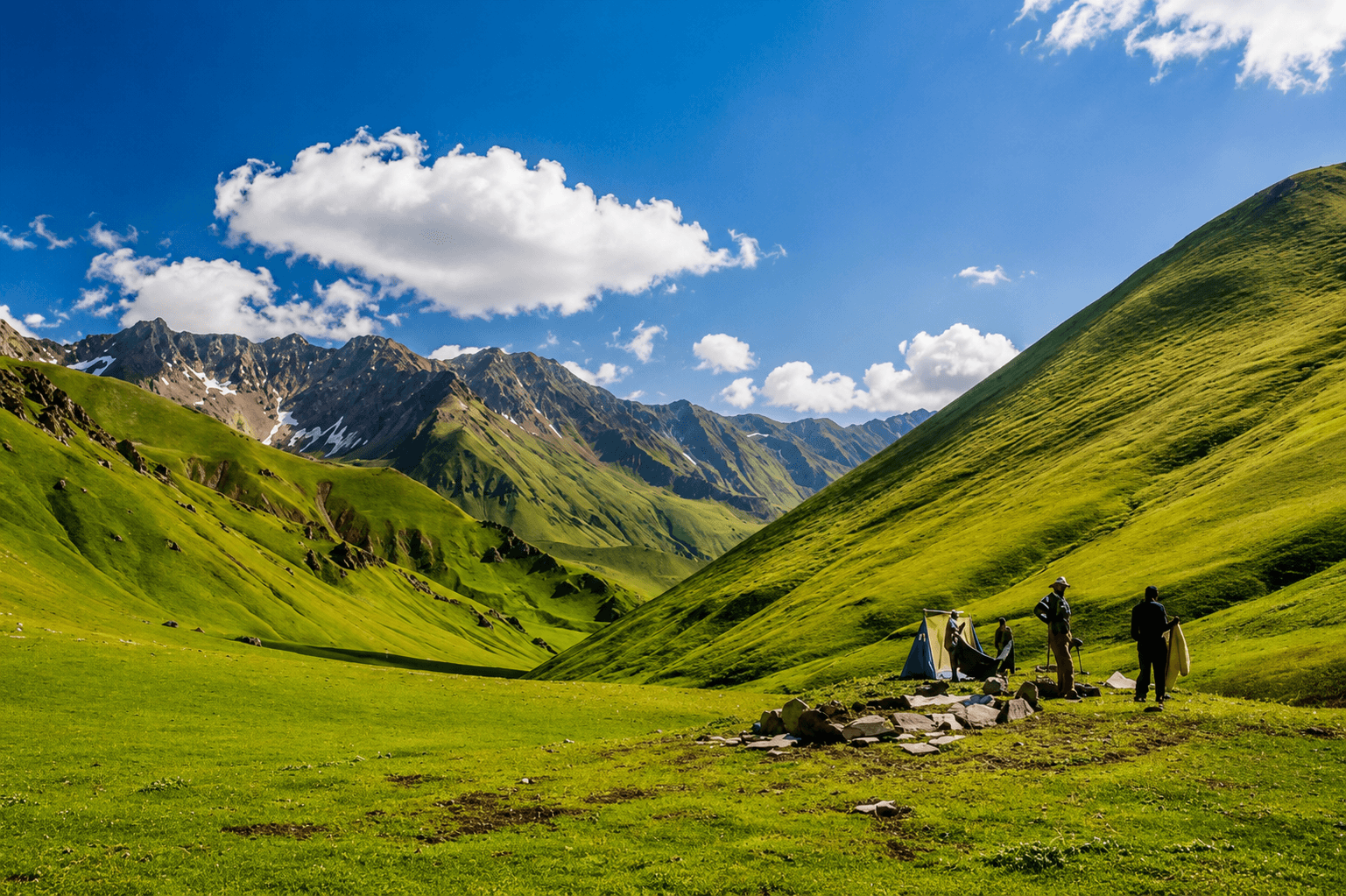
Aancha Top Trek: A Winter Summit Near Yamunotri
Aancha Top is a summit trek in the Yamunotri region of Uttarkashi, and one of the few Himalayan summits you can climb in winter without a technical route. The trail leaves Ranachatti, goes through forest to Bamsingh, then opens into the meadows at Dinnala before the final ridge to the top.
On a clear morning the summit shows Swargarohini, Bandarpoonch, Srikanth and Jaonli. Snow lies on the trail and campsites from December to February, so expect microspikes on the upper sections.
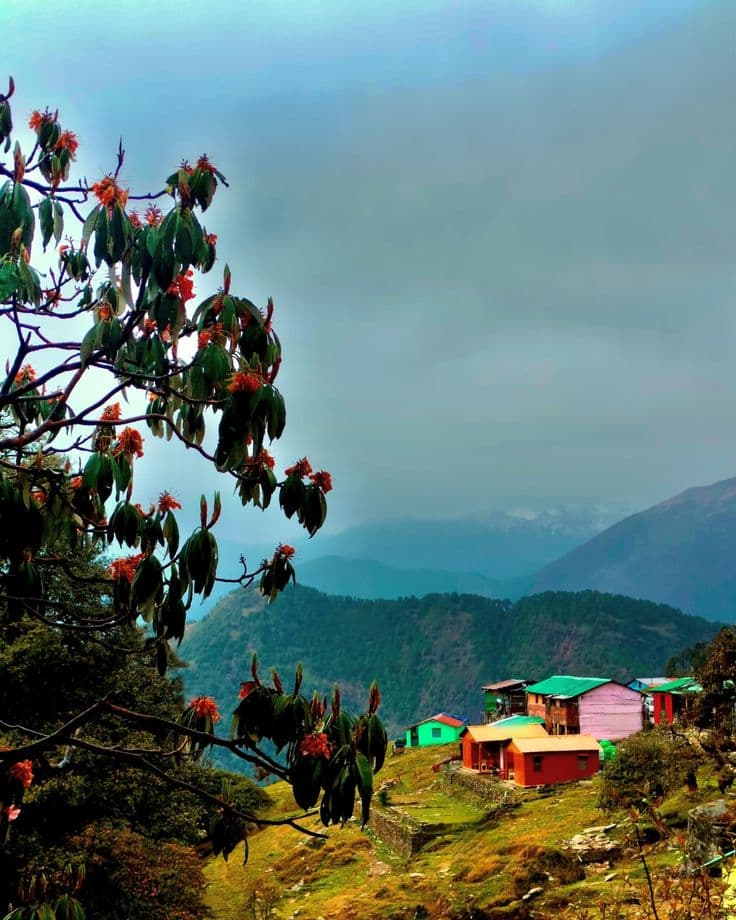
Gulabi Kantha Trek: Trek of the Year 2025
Gulabi Kantha was announced as Uttarakhand's Trek of the Year 2025 by the state tourism department, which picks one new trek each year to promote. It lies in the Yamuna valley, with Hanuman Chatti as the road base. The trail passes Nishni village, climbs through forest to Seema Thatch camp, then goes up to the Gulabi Kantha summit and back.
Winter turns the upper meadows and ridge white. The summit looks across to the Bandarpoonch and Swargarohini massifs.
Best Month for Winter Trekking in India
Himalayan winter conditions change noticeably between December and April. Here is what to expect by calendar month:
| Month | Snow Conditions | Night Temp | Day Temp | Trek Leader Verdict |
|---|---|---|---|---|
| December | Early snowfall starts late Dec; upper camps turn white | -3°C to -8°C | 5°C to 12°C | Crisp clear skies, festive holiday batches; book early. |
| January | Peak winter snow. Deep snow across trails and meadows | -7°C to -15°C | 0°C to 7°C | The quintessential snow trekking experience; requires 5 layers. |
| February | Deep snowpack persists; milder sunny days, sub-zero nights | -5°C to -10°C | 2°C to 10°C | Maximum snow depth with comfortable walking conditions. |
| March | Snow begins melting at lower camps; deep patches remain at summits | -2°C to 2°C | 8°C to 16°C | Spring warmth, blooming rhododendrons, mixed trail surfaces. |
| April | Lower trails green; snow restricted to passes and high ridges | 0°C to 5°C | 12°C to 20°C | Rhododendron forests in full bloom; pleasant day temperatures. |
Field Observation on Snowfall Timing: Fresh snowfall in the Himalayas cannot be guaranteed on an exact calendar date. In a dry winter, December may have dustings of snow while late January experiences heavy blizzards. In wetter cycles, snow starts in early December. For the deepest accumulated snow, mid-January through mid-February is statistically the most reliable window across Garhwal.
The 5-Layer Winter Trekking System
One giant heavy down jacket is a common beginner mistake. On the trail, you heat up while walking and freeze the moment you stop. The correct method is efficient layering that you can peel off or put on in 30 seconds:
Critical Extremities Checklist:
• 2 Pairs Gloves: Thin inner fleece + Waterproof outer shell
• UV400 Sunglasses: Mandatory to prevent snow blindness
• 1 Dedicated Dry Woollen Sock Pair kept solely for sleeping
How Cold Does It Really Get?
Winter nights at Kedarkantha Base or Khullara consistently register between -8°C and -15°C. Water in outside bottles freezes solid by 9:00 PM. Mobile batteries discharge in hours if not kept inside sleeping bag pockets.
Cold does not just test your clothes; it drains energy. Dehydration accelerates hypothermia because cold air suppresses the natural thirst reflex. Mountthrill leaders enforce daily warm soup and adequate fluid intake at every camp.
Difficulty & Physical Conditioning
Walking through powdery snow demands more cardiovascular energy per kilometre than dry summer trails. Microspikes give grip on hard snow and ice, but your legs must sustain the rhythm.
The Mountthrill 4-Week Prep Standard:
• Jog or brisk-walk 5 km in 35 to 40 minutes without stopping.
• Add stair-climbing with a light backpack to build leg endurance.
• Regular lunges and squats to build quad and calf stability.
What Does a Winter Trek Cost?
Mountthrill believes in complete pricing transparency without hidden campsite fees, permit surcharges, or on-trail surprises:
What Is Included in Mountthrill Packages
- ✓All forest permits, environmental entry fees, and camping permits.
- ✓All-weather dome tents, sub-zero sleeping bags & thermal fleece liners.
- ✓Safety technical equipment: Microspikes and gaiters provided to every trekker when snow requires.
- ✓All meals on trek: nutritious, warm, high-calorie mountain meals curated for cold weather.
- ✓Certified mountain trek leaders, local Garhwali guides, cook team, and safety support crew.
- ✓Medical equipment: Emergency oxygen cylinder, pulse oximeter, and comprehensive mountain first-aid kits.
What Is Not Included (Budget Separately)
- ✕Personal trekking gear (hiking shoes, thermal layers, jacket, backpacks). Rentals available.
- ✕Backpack offloading onto mules/porters (optional, charged per day).
- ✕Personal travel insurance with high-altitude emergency medical coverage.
- ✕Meals during highway transit between Dehradun/Rishikesh and base villages.
- ✕Emergency evacuation costs or unforeseen road blockage hotel stays.
Why Experience the Himalayan Winter with Mountthrill?
We keep our departures deliberately sized so leaders know your pace, monitor your acclimatisation, and give personal attention on every trail.
Our trek leaders are qualified mountaineers with Wilderness First Responder training. Safety is never compromised for itinerary speed.
We are based in Dehradun and manage our camps, transport coordination, mountain kitchens, and gear inventory directly from our base.
If snow conditions are unsafe, we turn back. If a trek is too demanding for your current fitness, our advisors tell you plainly before you book.
Frequently Asked Questions About Winter Treks
Honest answers from our field team on gear, safety, fitness, and bookings:
Ready to Stand on a Himalayan Snow Summit This Winter?
Batch slots fill up fast during December, January, and February. Talk to our Dehradun team to confirm available dates, gear requirements, and route preparation.
